


Table of Contents
Understanding O-Levels in Singapore
The Singapore-Cambridge General Certificate of Education Ordinary Level (GCE O-Level) is a nationally recognised qualification administered jointly by the Singapore Ministry of Education (MOE) and the University of Cambridge Local Examinations Syndicate (UCLES).
O-Levels assess students’ knowledge, application skills, and exam readiness across a range of subjects, from English and Mathematics to Sciences and Humanities. They are often considered the foundation for post-secondary options, including Junior College (JC), Polytechnic, or vocational education.
O-Level Syllabus and Subjects
Singapore’s O-Level curriculum is broad, covering core and elective subjects. Here’s a simplified breakdown:
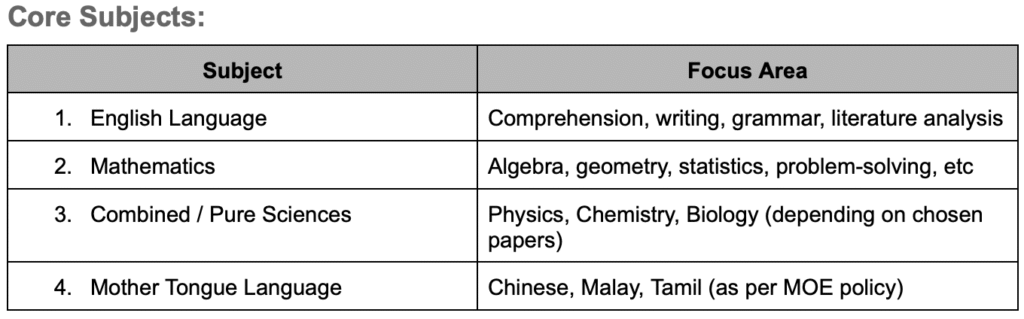
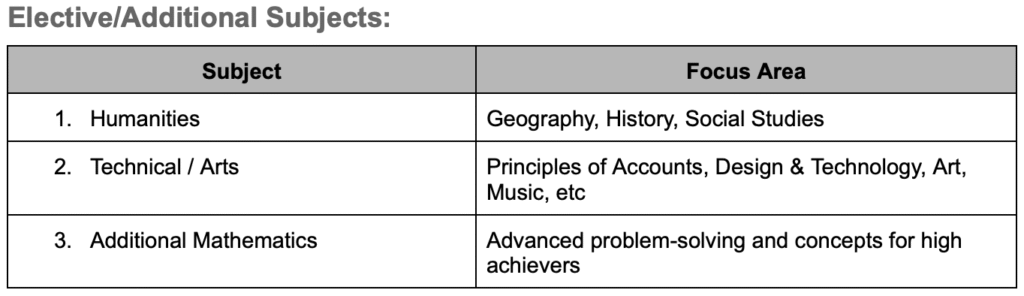
How many subjects are in O-Levels?
Most students take 6 – 9 subjects, with a combination of mandatory and elective subjects depending on stream and school requirements.
Pro tip: Start by reviewing the syllabus for each subject. Knowing exactly what topics are examinable reduces wasted time and allows targeted practice.
Exam Dates, Schedule, and Grading System
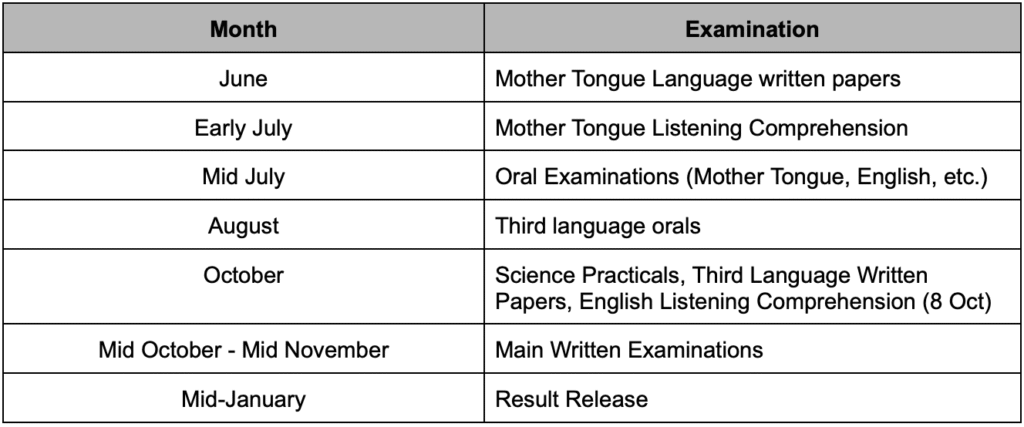
O-Level Exam Timeline
While exact dates vary slightly each year, the general schedule is:
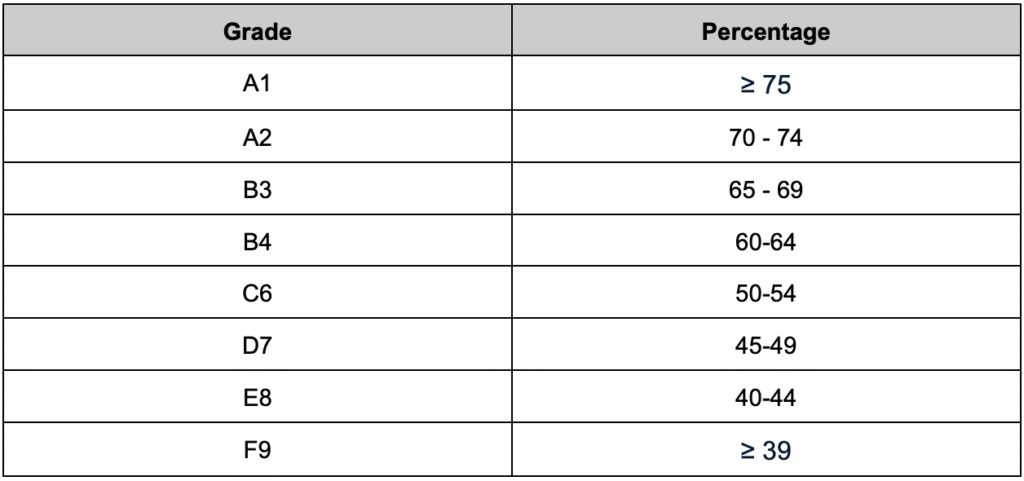
Grading System
Singapore uses the following grading scale for O-Level subjects:
Understanding L1R5 and L1R4 Scores
O-Level students in Singapore use L1R5 and L1R4 scores to determine eligibility for Junior Colleges (JCs) and Polytechnics.
L1R5 (for JC admission):
- L1 = English or Higher Mother Tongue
- R5 = Five relevant subjects chosen for JC entry
- Total score = Sum of grades from L1 and R5 subjects
- Lower scores are better. For example, a student with an L1R5 of 10 has a stronger chance of gaining JC admission compared to someone with a score of 20.
L1R4 (for Polytechnic admission) follows a similar calculation but considers four relevant subjects instead of five.
Deduct a few bonus points from your O level score !
- Excellent performance in specific areas like CCA (up to 2 points)
- Higher Mother Tongue (up to 2 points) OR
- Applying to an affiliated JC (up to 2 points)
Tips, Tricks, and Exam Preparation Strategies
Preparing for O-Levels can feel overwhelming, but a structured approach, consistent effort, and smart strategies make the process manageable. Here are practical, evidence-based tips to help students study effectively and maximise their results.
1. Understand the Syllabus Thoroughly
Before diving into textbooks or past papers, make sure you know what topics are examinable.
- Download the official MOE or SEAB syllabus for each subject.
- Highlight high-weightage areas, these are topics that appear frequently in past exams.
- Make a topic checklist to track what you’ve revised and what needs more work.
2. Use Past Papers Strategically
Past papers are the most reliable tool for exam preparation. They help you:
- Familiarise yourself with question formats and wording
- Identify commonly tested topics
- Build timing skills for the actual exam
Tips for effective practice:
- Attempt past papers under timed conditions to simulate real exam pressure.
- Check answers using examiner reports to understand the marking scheme.
- Analyse mistakes and note down recurring errors to target weak areas.
3. Manage Your Time Wisely
O-Level preparation is as much about time management as it is about studying. A well-planned schedule keeps you consistent and reduces stress.
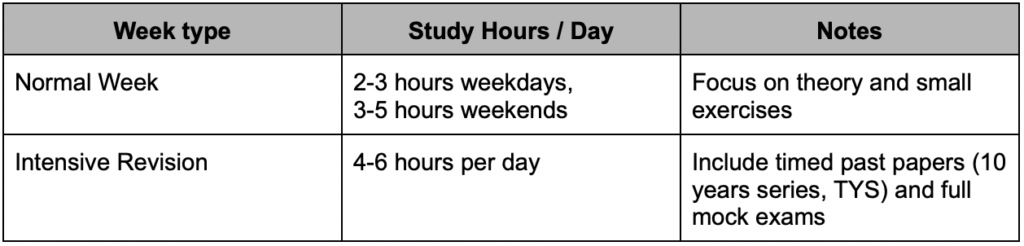
Pro tip: Break your revision into small, focused sessions (e.g., 45 – 60 minutes) with short breaks. This improves concentration and retention.
4. Prioritise Weak Areas
Not all subjects or topics are equally challenging. Identify areas where you consistently struggle, and allocate extra practice time.
- Use short daily sessions (15 – 30 minutes) to review weaker topics.
- Combine weak-topic practice with past paper questions for applied learning.
- Track your progress weekly to see improvement.
5. Develop Smart Exam Techniques
Knowing the content isn’t enough, exam technique can make a big difference.
- Read the questions carefully and underline key terms.
- Allocate marks proportionally (e.g., 1 mark per step or point).
- Start with confident questions to secure marks early.
- Plan essays or structured answers before writing to avoid missing points.
Tip: For subjects like English or History, always spend a few minutes outlining your answers before writing.
6. Include Regular Rest
Consistent studying is important, but burnout can sabotage preparation.
- Schedule at least 1 rest day per week to recharge mentally.
- Aim for 7-8 hours of sleep nightly.
- Incorporate light exercise or hobbies to reduce stress.
7. Combine Study Methods
Variety keeps your brain engaged and improves memory retention. Examples:
- Visual learners: Use diagrams, mind maps, and colour-coded notes.
- Auditory learners: Record yourself reading notes and listen during commutes.
- Practice-focused learners: Solve past papers and timed drills regularly.
8. Start Early and Revise Consistently
O-Level preparation is not a sprint, it’s a marathon. Students who begin revising several months in advance (ideally a year for major subjects) can cover the syllabus thoroughly and build confidence.
Tips: According to SEAB guidance, consistent revision over months reduces exam anxiety and improves accuracy in timed papers.
Common Challenges: Hardest Subjects and Grade Targets
Hardest Subjects
Based on student feedback, these are often the most challenging:
- Mathematics & Additional Mathematics – require logical thinking and consistent practice
- Science Papers (Chemistry / Physics) – calculations and theory-heavy questions
- English Language – comprehension and composition can be tricky without regular practice
- Higher Mother Tongue Languages – nuanced grammar and cultural context
Tips to Overcome
- Practice consistently
- Use past papers under timed conditions
- Seek guidance or tuition for difficult topics
How Spring College International Supports O-Level Learners
At Spring College International (SCI), we understand the challenges of O-Level preparation. Our courses provide:
✅ Highly Experienced Teaching Team – Lessons are led by educators with deep familiarity with O-Level standards, marking requirements, and common student pitfalls.
✅ Results-Driven Lesson Structure – Each lesson is designed with clear learning outcomes, ensuring students know exactly what is required to score in exams.
✅ Intensive Exam Practice – Students train under exam conditions using structured mock papers and past-year questions to sharpen accuracy and time management.
✅ Targeted Academic Intervention – Weak areas are identified early and addressed through focused guidance, preventing small gaps from becoming major obstacles.
✅ Confidence-Building Progress Tracking – Continuous assessments and feedback allow students to see measurable improvement, building confidence as exams approach.
Tips to Overcome
- Practice consistently
- Use past papers under timed conditions
- Seek guidance or tuition for difficult topics
Final Encouragement
O-Level exams are challenging, but success is achievable with consistent effort, planning, and the right support. Start early, focus on your weaker areas, and make a steady study plan. Remember: small, daily progress adds up to big results.
With structured guidance from SCI, students can approach exams confidently, avoid burnout, and maximise their potential.
Register Now !
If you’re preparing for O-Level 2026, Spring College International offers structured O-Level preparatory courses and targeted tuition to help you succeed. Take the first step now and build the foundation for academic confidence and success.