

Table of Contents
Singapore is one of Asia’s leading education destinations, attracting thousands of international students every year. Its world-class education system, multicultural environment, excellent safety, and globally recognised qualifications make it an ideal place to study.
Before planning your education journey, it’s important to understand the overall cost of studying in Singapore. Expenses include tuition fees, accommodation, food, transportation, health insurance, study materials, and personal spending.
This guide provides an overview of the typical costs international students should consider in 2026.
Why Study in Singapore?
Students choose Singapore because it offers:
- Globally recognised qualifications
- High-quality education
- Safe and modern environment
- English-medium instruction
- Strong career opportunities
- Excellent public transport
- Multicultural community
- Gateway to international careers
Although Singapore is considered one of Asia’s most developed countries, it remains a cost-effective study destination compared with many Western countries.
Tuition Fees in Singapore
Tuition fees vary depending on:
- Institution
- Course level
- Programme duration
- Field of study
Examples include:
- English Language Courses
- Diploma Programmes
- International High School
- Preparatory Courses (AEIS, O-Level, A-Level)
- Professional Development Courses
As fees differ by programme, students should check the latest tuition details with their chosen institution before applying.
Accommodation Costs
Accommodation is usually one of the largest monthly expenses.
International students commonly choose:
Student Hostels
A popular option offering shared facilities and an affordable living environment.
Shared Apartments
Students share rental costs with roommates while enjoying greater independence.
Private Apartments
Suitable for students seeking additional privacy and comfort, typically at a higher cost.
Accommodation costs depend on:
- Location
- Room type
- Facilities
- Number of occupants
Choosing accommodation near your campus can also reduce transportation expenses.
Food Expenses
Singapore offers a wide variety of affordable dining options.
Students can choose from:
- Hawker Centres
- Food Courts
- Cafeterias
- Restaurants
- Home Cooking
Eating at hawker centres and preparing meals at home can help reduce monthly food costs while allowing students to enjoy Singapore’s diverse cuisine.
Transportation Costs
Singapore’s public transport system is efficient, reliable, and affordable.
Students frequently use:
- MRT (Mass Rapid Transit)
- Public Buses
Using public transport instead of taxis can significantly reduce daily travel expenses.
Study Materials
Students should budget for:
- Textbooks
- Stationery
- Printing
- Laptop or Computer
- Internet Services
- Software (if required)
Many institutions also provide online learning resources, helping students reduce additional expenses.
Health Insurance
International students may need health insurance depending on their institution’s requirements.
Health insurance helps cover:
- Medical consultations
- Hospitalisation
- Emergency treatment
Students should check with their institution regarding insurance coverage and recommendations.
Personal Expenses
Additional monthly expenses may include:
- Mobile phone plans
- Entertainment
- Clothing
- Personal care
- Gym memberships
- Weekend activities
Creating a monthly budget helps students manage their finances effectively.
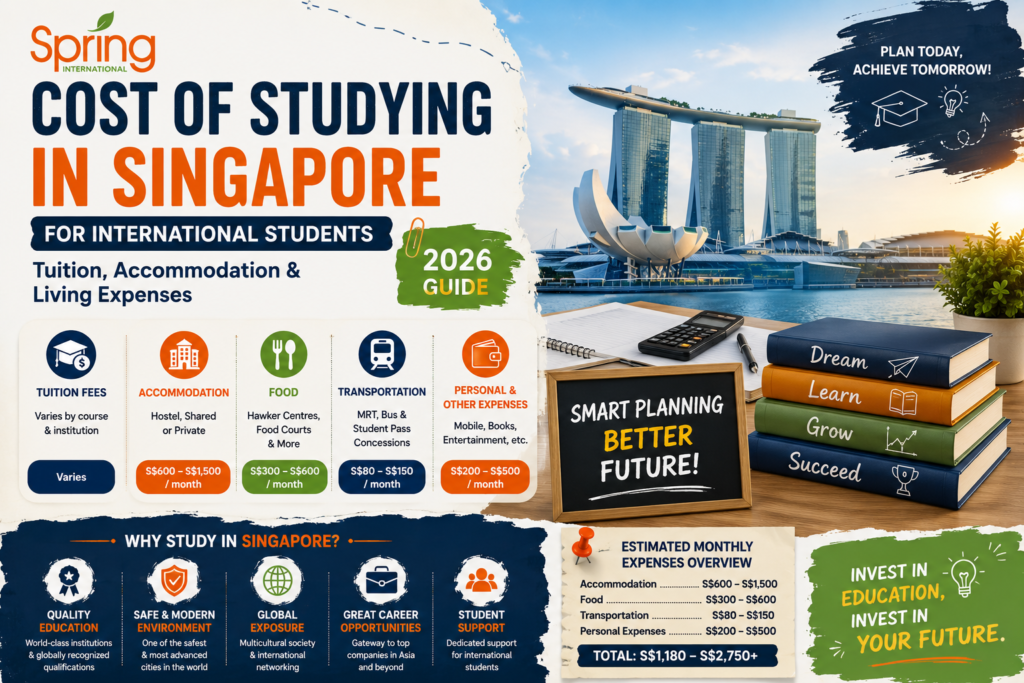
Estimated Monthly Living Expenses
Actual costs vary based on lifestyle, accommodation, and spending habits.
Typical monthly expenses may include:
Expense Category | Estimated Range (SGD) |
Accommodation | 600 – 1,500 |
Food | 300 – 600 |
Transportation | 80 – 150 |
Mobile & Internet | 30 – 80 |
Personal Expenses | 200 – 500 |
Study Materials | Varies |
These figures are approximate and intended as a general guide. Individual expenses can differ.
Tips to Reduce Your Study Costs
International students can manage expenses by:
- Choosing shared accommodation.
- Using public transport.
- Eating at hawker centres.
- Buying second-hand textbooks.
- Planning monthly budgets.
- Taking advantage of student discounts.
- Cooking meals when possible.
Good financial planning helps students enjoy a comfortable and rewarding study experience.
Why Choose Spring College International?
Spring College International offers internationally recognised programmes in a supportive learning environment for students from around the world.
Students benefit from:
- Experienced lecturers
- Industry-focused curriculum
- Modern learning facilities
- International student support
- Small class sizes
- Practical education
- Convenient campus locations
- Diverse student community
The admissions team also provides guidance on course selection, accommodation information, and preparing for student life in Singapore.
Frequently Asked Questions
Is studying in Singapore expensive?
What is the biggest expense for international students?
Can students reduce living costs?
Is public transport affordable?
Does Spring College International help international students?
Final Thoughts
Studying in Singapore is an investment in your future. By understanding tuition fees, accommodation options, living expenses, and budgeting effectively, international students can plan a successful educational journey with confidence.
Whether you’re enrolling in an English course, diploma programme, preparatory course, or international high school, careful financial planning ensures you can focus on achieving your academic and career goals.
If you’re ready to begin your studies in Singapore, Spring College International is here to help you every step of the way.